

Full-Arch Dental Implants vs. Traditional Dentures: Pros and Cons
When you lose most or all of your teeth, choosing the right path can feel overwhelming. For many years, people relied on traditional dentures as the primary solution. Today, dental technology gives us a more permanent and stable alternative. Deciding between these two different tooth replacement options shapes your daily life, from eating and speaking to your overall confidence and health.
We know that this decision requires clear, comprehensive information. As dental professionals, we guide patients through this process every day, weighing the unique advantages and disadvantages of each option against their personal needs, lifestyle, and long-term goals. In this guide, we break down the key differences between full-arch dental implants and traditional dentures to help you identify which solution might suit you best.
Understanding the Fundamental Differences
At first glance, dentures and full-arch implants both replace a full set of teeth. However, they work very differently, and these differences create distinct pros and cons for each. A traditional full denture is a removable prosthetic appliance. It has a gum-colored acrylic base that fits over your gums, with a complete set of artificial teeth attached. The upper denture usually covers the roof of your mouth (the palate), and the lower one is shaped like a horseshoe to leave room for your tongue. Suction and sometimes dental adhesive help keep these appliances in place.
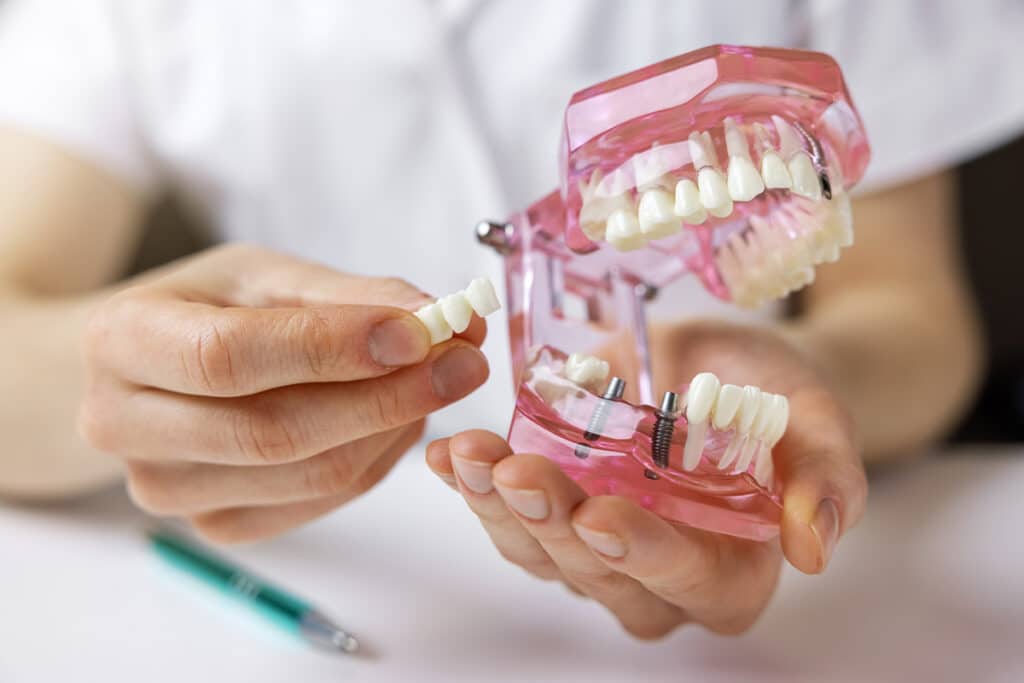
In contrast, full-arch implants offer a fixed, non-removable solution. We use four to six dental implants—small titanium posts surgically placed in your jawbone—to anchor the restoration. We then attach a custom-made, permanent bridge of teeth to these implants. You receive a complete set of teeth that integrates with your jaw and functions much like natural teeth. This core distinction—between a removable appliance resting on the gums and a fixed prosthesis anchored to bone—drives all the differences in stability, comfort, and impact on oral health.
Stability, Function, and Quality of Life
One of the most significant factors for our patients is how their new teeth feel and function day to day. This contrast between dentures and implants stands out the most. When you use traditional dentures, you go through an adjustment period as you learn to eat and speak with them. Because dentures rest on the gum tissue, they may shift or slip, especially when you eat hard or sticky foods. This instability can undermine your confidence in social situations and limit your diet, as you might avoid foods you fear will dislodge your dentures. The upper denture, which covers the palate, can also change your sense of taste and overall eating experience.
Full-arch implants, in contrast, provide unparalleled stability. Anchored directly to your jawbone, they do not move. You can eat whatever you want with confidence, just as you would with natural teeth. You regain nearly 100% of your normal biting and chewing ability, compared to the sharp decline seen with dentures. Also, since the prosthesis does not cover the roof of your mouth, you experience the full flavor and texture of your food. This stability elevates your quality of life, removing daily worries about slipping dentures and dietary restrictions.
Key Functional Comparisons:
- Bite Force: Implants return almost full chewing power, while dentures provide just a fraction of this force.
- Food Restrictions: Implant patients enjoy a regular diet. Denture wearers often avoid hard, chewy, or sticky foods.
- Speech: Dentures sometimes cause a lisp or make certain sounds harder to pronounce. Implants function like natural teeth, so they do not interfere with speech.
- Confidence: Implants deliver the security that your teeth will not slip or fall out during conversation or meals.
Long-Term Oral Health and Maintenance
These two options impact your long-term oral health very differently. When you lose teeth, your jawbone misses the stimulation it needs from tooth roots. Without this, your body begins to break down the unused bone, a process known as bone resorption. With time, your jaw shrinks and your facial structure changes, leading to a sunken look. Traditional dentures rest on the gums, so they cannot stop this process. In fact, the pressure from dentures can sometimes speed up bone loss. This problem explains why you must reline or replace dentures every few years; as the jaw changes shape, dentures lose their fit.
Full-arch implants address this problem directly. When we place the titanium implants into your jawbone, they fuse with the bone through osseointegration. These implants function like natural tooth roots, providing the necessary stimulation to maintain bone density and preserve your facial structure. As a result, implants give you a more sustainable and lasting oral health solution. For maintenance, you must remove dentures daily for cleaning and soak them at night. Implants, by contrast, allow you to brush and floss just like you do with natural teeth, using special tools to clean around the implants during your regular dental routine. Both solutions require care, but implant maintenance fits naturally into daily oral hygiene rather than requiring removable appliances.
Making Your Decision: A Look at Cost and Process
Cost often plays a key role in decision-making. Traditional dentures cost much less upfront than full-arch implants. This price difference makes dentures a more accessible choice for those with tighter budgets or people needing immediate tooth replacement. However, long-term expenses add up. You must buy adhesives, cleaning solutions, and pay for periodic relining or replacement as your jawbone changes. Over the years, these recurring expenses can become significant.
Full-arch implants require a larger initial investment. The process includes surgery, implant costs, and the custom-crafted final prosthesis. Many patients see this as a long-term investment in their overall health and quality of life. Implants are a permanent solution that helps prevent further oral health problems, such as bone loss, making their long-term value substantial. Ongoing costs are mainly limited to regular hygiene and check-ups. When you weigh the immediate financial commitment against the lifelong benefits and durability, full-arch implants often deliver greater value over time.
Frequently Asked Questions About Full-Arch Implants
What does the process for getting full-arch implants involve?
We begin with a comprehensive consultation using 3D imaging to assess your jawbone density and plan for implant placement. During surgery, we remove any failing teeth and place four to six titanium implants into your jaw. In most cases, we can attach a temporary, fixed set of teeth on the same day, so you always leave with teeth. Over the next few months, the implants fuse with your bone. Once healing finishes, we custom-craft your permanent bridge and secure it to the implants.
Am I a good candidate for full-arch dental implants?
People who have lost a full arch of teeth often qualify for full-arch implants. You need enough jawbone to support the implants, but even if you have experienced bone loss, we may recommend a preliminary procedure like bone grafting. Good overall health helps ensure successful healing. A thorough evaluation with our dental implant specialist will confirm your eligibility and allow us to create a personalized plan for you.
At Family and Implant Dentistry, we help our community restore their smiles and regain confidence with state-of-the-art dental solutions. We use advanced technology and a compassionate, patient-first approach to care. If you want to explore your tooth replacement options, please reach out to us to schedule a consultation.